Voice Finance
Down payment: calculating a real timeline instead of a hopeful one
The deposit isn't the whole sum you'll need. How to total the real requirement, where the timeline usually goes wrong, and why the emergency fund comes first.
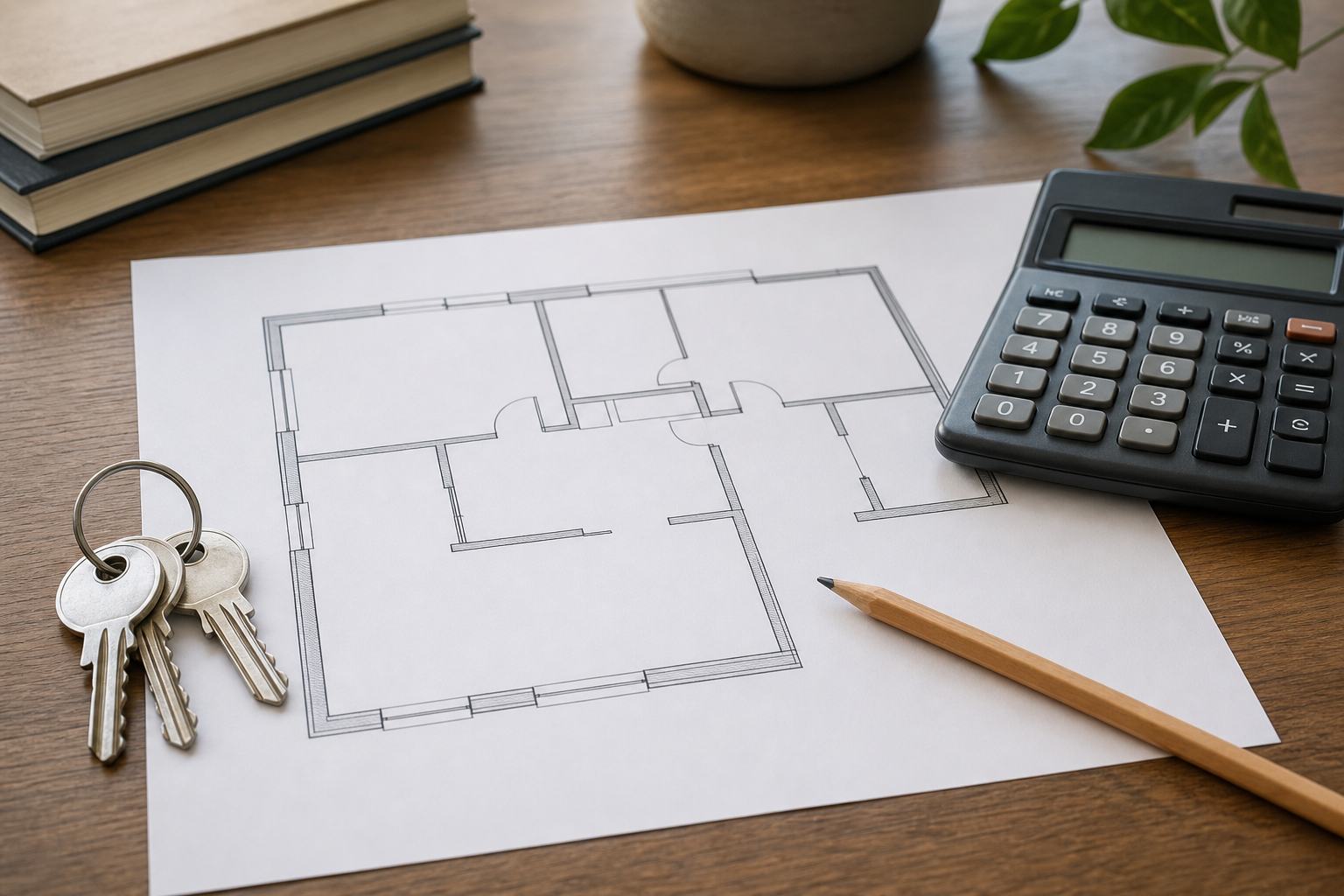
“Save for a down payment” sounds clear until someone starts calculating it. Then the amount turns out to be unknown, the timeline unknown, and the saving should apparently have started two years ago.
Here’s what to calculate, in what order.
The deposit isn’t the whole number
The first and most expensive mistake. Someone saves precisely the deposit, reaches the target, and discovers it isn’t enough.
On top of the deposit come closing costs, insurance, valuation, and agent fees where they apply. Then moving, furniture and appliances, and with an older property almost always some level of work before you can live in it.
The exact items and their size depend on your country, the type of purchase and the specific lender, so the only reliable route is finding out for your own situation rather than from general articles. But the number to save is meaningfully larger than the deposit, and building that in at the start of the calculation matters.
One more item nearly everyone forgets: the monthly payment is usually higher than your current rent. That difference appears the moment you buy and stays for years, so checking whether it fits your budget is more useful than calculating a savings timeline.
Calculating the timeline
The arithmetic is simple: the full required amount divided by what you actually save each month.
“Actually” carries the weight there. Use the last three months of reality, not your intention. The gap between “I plan to save $900” and “I save $520” turns four years into seven.
If the timeline comes out beyond five years, there’s a feature of the calculation worth knowing. Over that span, property prices, your income and lending conditions all move noticeably. Planning five years ahead to the month isn’t meaningful; calculating two or three and revising is.
A useful realism check: if the required monthly contribution exceeds a third of what’s left after your fixed costs, the timeline will probably stretch. People rarely sustain that intensity for years.
The emergency fund goes first
An order many people invert, at considerable cost.
The temptation is understandable — put everything into the goal and arrive sooner. The problem is that across two or three years something unplanned will certainly happen. With no reserve that means either fresh debt or raiding the goal, and the second hits harder psychologically than it looks on paper.
The working order: first a buffer covering one month of fixed costs, then the main goal, with the buffer growing toward three months in parallel. Sizing it is covered in the emergency fund.
Expensive debt is a separate question. If you’re carrying a high-rate loan, saving toward a deposit alongside it usually loses on arithmetic. The order and its caveats are in save or pay off debt.
Where to hold the money
The requirements depend on the horizon, and this is the one place where it changes anything.
Under two years, the money belongs somewhere its value doesn’t fluctuate and where it’s available when needed. A purchase doesn’t wait for a market to recover.
Beyond that, the question is harder and has no single answer: it depends on your tolerance for risk, your tax situation and the instruments available to you. This is precisely where a conversation with a qualified adviser is worth more than any article, this one included, because the answer depends on circumstances the text doesn’t know.
What can be said safely: money assigned to a specific goal with a known date generally isn’t placed where it could be down on that date.
Accelerating without heroics
Three approaches that outperform austerity.
Send one-off money into the goal whole. Bonuses, refunds, proceeds from selling things. They never entered your normal budget, so they create no sense of deprivation.
Send income growth into the goal. A raise of $300 a month, $200 of it into the transfer. Your standard of living doesn’t fall; it simply rises more slowly than it could have.
Cut one large line rather than ten small ones. Moving somewhere cheaper for two years saves more than giving up coffee for five, and it takes one decision instead of daily ones.
When the goal isn’t getting closer
Sometimes a year passes, a tenth is saved, and it’s obvious the approach isn’t working.
Three numbers are worth examining. What you genuinely save each month. What the full requirement is. And how much the price of what you’re buying moved over that year.
If prices are rising faster than your savings, discipline isn’t the issue: the target is outrunning you. The response is revising the goal or changing your income, not economising harder.
If savings are accumulating but slowly, the honest move is recalculating the timeline and saying it out loud. A four-year goal that you privately treat as a two-year one produces a permanent sense of falling behind while you’re actually progressing normally.
The first calculation
Spend half an hour on one thing: the full amount needed at the purchase and immediately after it, not just the deposit.
Divide it by what you currently save in reality. The resulting timeline is your starting point. It will probably be longer than expected, and that’s valuable: you can work with a number, whereas you can’t work with a vague sense of it. Where to find money to raise the contribution is covered in saving when there’s nothing left to save.
Related articles
- Financial literacy 7 min read
Emergency fund: how much you actually need and where to keep it
The standard six-months advice is discouraging enough that nobody follows it. How to size yours from fixed costs and which milestone to reach first.
- Financial literacy 7 min read
Save or pay off debt: why doing both at once is usually worse
The arithmetic says one thing and behaviour says another. How to compare rates, why a minimal buffer comes first, and where the comparison breaks down.
- Financial literacy 7 min read
How to save when there's nothing left to save
First establish whether nothing is left, or nothing is left by the end of the month. Those are different situations with different fixes, and the second is far more common.